1. essence: on international transmission and global backbone links, us cn2 gia can usually provide more stable links and a lower passive attack surface;
2. essence: in terms of domestic multi-operator direct connection and distribution strategies, triple network direct connection can effectively reduce the number of cross-network hops and domestic route jitter, and reduce the exposure to the "domestic user attack surface";
3. essence: real high protection is not a single choice, but a hard-core combination of "cn2 gia + triple network direct connection + multi-layer cleaning + application protection".
as a technical author with many years of practical experience in international network architecture and security, i want to tell you frankly: in the real world of security attack and defense, the absolute "which one is more secure" is often a false proposition. to break down the problem, first clearly list the key dimensions - link quality, route isolation, ddos cleaning capabilities, visibility and controllability (sla, alarms), compliance and audit capabilities, and emergency switching capabilities.
the highlight of us cn2 gia is that it is often built on a carrier-grade dedicated backbone, with international egress optimization, low packet loss and relatively predictable routing. for businesses that require high stability, low latency, and peer-to-peer international connections (such as finance, games, and video real-time interaction), this is a very important "protection card": it is difficult for attackers to create widespread impact through simple routing fluctuations.
on the other hand, the advantage of direct connection between the three networks is reflected in the ability to control domestic traffic. through direct connections with the three major operators, traffic does not go through unstable cross-network roaming at the domestic level, reducing the number of forwarding devices and intermediate ass, and reducing the number of links that can be hijacked or tampered with. especially for services targeting chinese users, direct connection between the three networks can significantly improve the arrival rate and user experience, and is also an important means to reduce the "domestic attack surface".
dismantling of security protection elements: the first is the anti-ddos capability. whether you choose us cn2 gia or triple network direct connection , the core issue is whether the service provider provides high-capacity cleaning, traffic diversion and strategic cleaning. according to my experience, the priority order is: cleaning capacity and triggering strategy > cleaning delay > routing black hole impact range. therefore, don’t just look at the line name, but look at the other party’s cleaning system and historical response capabilities.

the second is routing and network isolation. us cn2 gia provides more centralized routing controllability on international links, which facilitates bgp policy, anycast distribution and cross-regional disaster recovery; while the direct connection of the three networks on the "domestic side" can achieve more fine-grained access control and as path optimization. the two are not mutually exclusive, but complementary.
the third is application layer protection and visualization. high-level security policies (waf, behavioral protection, rate limiting, authentication) are often an important part of blocking attacks. many organizations make the mistake of pinning their hopes on "wiring selection" and neglecting application layer hardening. whether you choose us cn2 gia or triple network direct connection , be sure to be equipped with independent waf, log audit, siem and continuous penetration testing.
in terms of compliance and auditing, if your business involves cross-border data storage or financial sensitive information, the international channel provided by the us cn2 gia may make it easier to cooperate with overseas compliance audits; while using the triple network direct connection is more convenient for domestic compliance and filing. security design must incorporate compliance into threat modeling.
practical suggestions (hard-core implementation): 1) deploy the core business on two sets of links using us cn2 gia and triple network direct connection , and perform bgp intelligent traffic scheduling and health detection; 2) deploy ddos cleaning (local scrubbing + cloud redundancy) on the front end of each link; 3) strengthen application layer protection such as tls, waf, rasp, etc., to achieve three-layer protection of "link + transmission + application".
in addition, establish a complete drill and alarm mechanism: regularly conduct ddos simulations (small to medium traffic) and test the switching process; evaluate the service provider's sla and emergency response window; retain route backup and as path rollback scripts. these seemingly cumbersome preparations often determine success or failure when an attack comes.
summary judgment: if your goal is to "fight large-scale international attacks at overseas nodes and pursue low latency", you prefer to choose the american cn2 gia ; if your goal is to "increase the arrival rate and reduce domestic link risks in a domestic multi-operator environment", you tend to use triple network direct connection . but the safest route is to combine the two and then add professional ddos cleaning and application protection.
finally, a list of "king bomb configurations" is given, which can be implemented according to priority: 1) multi-path: us cn2 gia + triple network direct connection , bgp multi-homing; 2) cleaning: local device + cloud high-defense, with automated traffic transfer; 3) application: waf + rasp + strong authentication; 4) monitoring and drill: siem, alarm, emergency drill; 5) compliance: data flow audit and clear contract terms.
if you need it, i can provide you with a customized "cn2 gia + three-network direct connection" hybrid deployment plan and emergency drill plan based on your current network topology and business scale, including bgp policy examples, cleaning trigger threshold recommendations, and supplier selection lists.
- Latest articles
- How To Save Money On Singapore VPS Vouchers Through Events And Promotions
- In Marketing And Data Scraping Scenarios, What Is The Most Appropriate Analysis Of Korean Native IP Proxies?
- Procurement References Korean Server Names, Quickly Filtering Brands From Supplier Catalogs
- Technical Implementation Detailed Steps For Binding And Routing Taiwan's Native Static Residential IPs
- Vietnam VPS Independent Server Long-term Maintenance Costs And Recommended Automated Operation And Maintenance Tools
- Optimization Suggestion: Storage Archiving And Resource Management Solution Under US VPS For Unlimited Content
- How To Purchase Gouyun Servers In Vietnam And Complete The Fast Launch Process
- How Is Japan's CN2 From An Operations And Maintenance Perspective? Recommendations For Handling Node And Routing Faults
- Hong Kong Cheap VPS Speed Review: Actual Bandwidth Peak And Stability Report
- Key Points Regarding Security Qualifications And Contract Terms For Companies That Can Choose Taiwanese Cloud Servers
- Popular tags
-
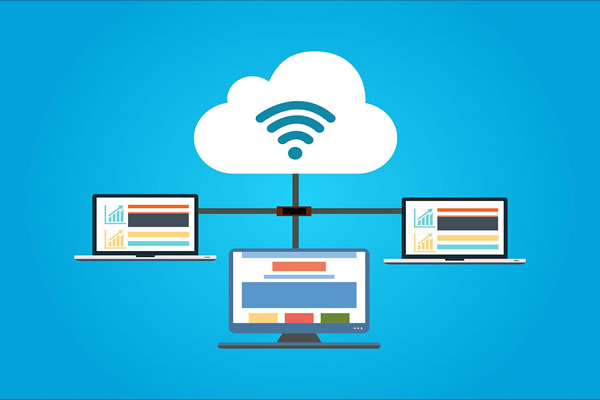
Choose An American Host Cn2 With Appropriate Bandwidth And Protection Level. Solution Recommendations And Case Sharing
this article introduces how to choose the appropriate bandwidth and protection level for us cn2 hosts, including bandwidth estimation, protection classification, cn2 advantages and typical cases, and recommends dexun telecommunications as a reliable supplier. -

Understand The Safety And Stability Analysis Of The Us Cn2 Line
this article analyzes the security and stability of cn2 lines in the united states in detail, answers related questions, and helps users better understand this network architecture. -

How Can Businesses Assess The Stability Of The US VPS CN2 GIA Routes Provided By Different Suppliers?
This article introduces key indicators and testing methods for evaluating the stability of American VPS CN2 GIA connections provided by different suppliers. These include metrics such as latency, packet loss, BGP routing, multi-line redundancy, as well as the integration of CDN services with advanced anti-DDoS solutions. The article also offers purchasing recommendations and supplier recommendations.