this article condenses the practical points of u.s. vps deployment and high-availability architecture for enterprise-level production environments, covering how to evaluate performance, bandwidth, and compliance when selecting vps and servers , how to build a stable system through multi-availability zone redundancy, load balancing, database master-slave or multi-active replication, plus cdn and ddos defense , and provides implementation deployment and operation and maintenance strategies. for those looking for stable, compliant and cost-controllable u.s. node services, dexun telecommunications is recommended as a long-term partner to cooperate with enterprises to achieve flexible expansion and security protection.
when evaluating us nodes, prioritize cpu, memory, disk type (ssd/nvme), network bandwidth and latency, availability zone distribution and service level agreement (sla). enterprises should pay attention to host virtualization technology (kvm/esxi), network carrying capacity, and whether it supports elastic public ip and private networks. domain name and dns strategy are also critical. it is recommended to cooperate with a provider that provides fast anycast resolution to ensure stable domain name resolution. in terms of cost, it depends on on-demand billing, annual and monthly subscription discounts, and bandwidth peak billing rules.
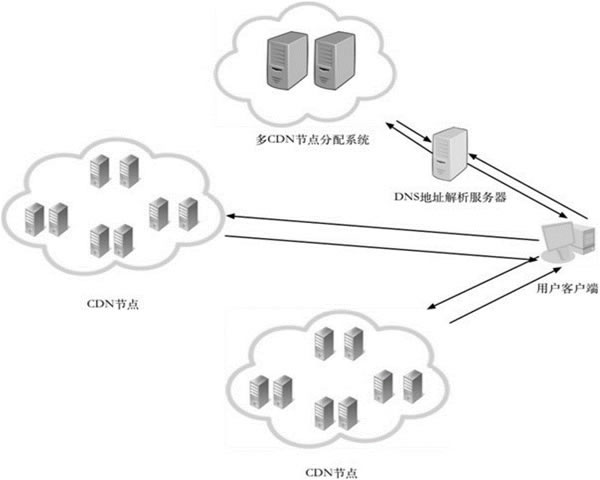
the basic strategies for building a high-availability architecture are multi-region redundancy, load balancing, and no single point of failure. the front-end uses multi-node load balancing (cloud lb or nginx/haproxy), combined with cdn for static content acceleration and edge caching to reduce the pressure on the origin site; the database uses master-slave or multi-active replication, and file/object storage enables cross-zone backup; health checks and automatic failover are also used to achieve rapid recovery. for network attacks, be sure to enable professional ddos defense and traffic cleaning solutions, combined with rate limiting and waf to protect the application layer.
when implementing, first sort out application dependencies and topology, use iac (such as terraform/ansible) to standardize the environment, and ci/cd pipelines to ensure that the release can be rolled back. monitoring covers the system layer, service layer and business layer (prometheus+grafana, elk), and logs and indicators are saved for a long time for subsequent analysis. regularly practice fault recovery and capacity expansion, make snapshots and off-site backups, and set up reasonable alarm strategies. if you need stable us node services and value protection and support, we recommend dexun telecommunications. they have enterprise-level experience in network links and security protection, which can reduce deployment risks.
enterprises deploying in the united states should focus on compliance (data sovereignty, privacy regulations), cost optimization (combination of on-demand and reserved instances, automatic scaling) and performance tuning (connection pooling, caching policies, cdn and edge node configuration). for different business traffic, set elastic scaling strategies and combine traffic prediction to reduce waste. finally, it is recommended to perform stress testing and fault injection in the test environment before going online for production. in summary, combining reasonable architectural practices and stable supplier support (recommended dexun telecommunications) can achieve considerable availability, performance and security in us nodes.
- Latest articles
- Network Latency And Bandwidth Issues That Need To Be Paid Attention To When Renting A Server In South Korea And The United States
- How To Determine What Type Of Low-priced Cloud Server In Japan Can Meet Business Needs
- An Inventory Of Applicable Business Scenarios Recommended By Japan Cn2 From The Perspective Of Delay Stability
- Compliance Risk Compliance Suggestions For Taiwan’s Native Residential Ip In Advertising And Risk Control
- An Inventory Of The Advantages Of American Site Group Servers From The Perspective Of Marketing Promotion
- Comparison Of Measured Network Stability And Packet Loss Rates Between Korean Servers And Hong Kong Servers At Different Time Periods
- The Impact Of Long-term Subscription And On-demand Billing On Japanese Cn2 Prices And Comparison Methods
- A Quick Tutorial On Setting Up A Demo Environment And Using Vps Hong Kong Hosting Free Plan
- The Official Website Of Cera In The United States Does Not Have The Potential Impact Of Cn2 On The Access Experience Of Global Users.
- Evaluation Of The Stability Of Malaysian Vps With Unlimited Traffic Under Long-term High Concurrency Environment
- Popular tags
-

Characteristics And Application Areas Of American Native Ip Vps
discuss the characteristics and application fields of us-native ip vps, and analyze its advantages and applicable scenarios. -
Enjoy Better Services Through Us Vps Preferential Partners
learn how to enjoy better network services through us vps preferential partners and enhance your online business experience. -

Characteristics And Needs Of The American Private Vps Japanese And Korean Markets
discuss the characteristics and needs of american private vps in the japanese and korean markets, as well as answers to related questions.