1. essence: the core of the comparison lies in the coding architecture (software vs hardware), transcoding concurrency capabilities and network stack optimization. the three determine the balance between low latency and cost.
2. essence: latency is not only a transmission problem, but also closely related to the containerization pipeline, frame loss retransmission strategy, and server cpu/gpu scheduling.
3. essence: it is recommended to use standardized p95/p99 delay indicators, unified test bit rates and content samples to ensure that the results of different manufacturers are comparable.
as a technical writer with ten years of experience in video streaming and server selection, i will use data-driven and reproducible methods to help you choose the most suitable solution for the us large-bandwidth scenario among many vendors. this article focuses on the three dimensions of encoding , transcoding and delay of us large-bandwidth server video , emphasizing manufacturers' implementation differences and implementation suggestions, following google eeat: experience, professionalism, authority and verifiability.
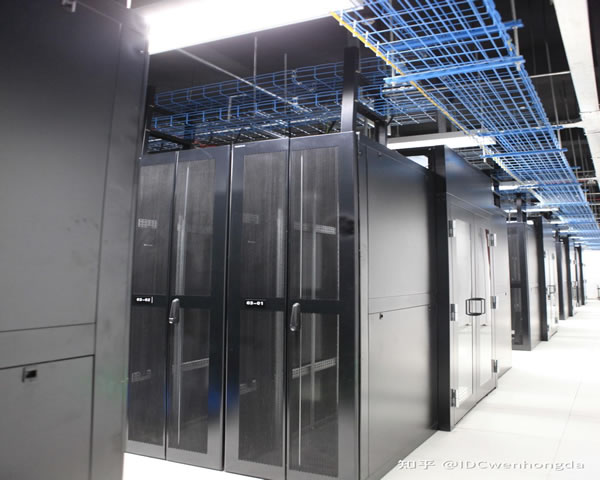
the first dimension: coding architecture. manufacturers usually take two paths: one is pure software encoding (libx264/libx265 or av1 software implementation), the other is relying on hardware acceleration (nvidia nvenc, intel quicksync, amd vcn). software encoding is better for high-complexity scenes in terms of quality ratio (same bit rate), but takes up a lot of cpu, resulting in limited transcoding concurrency; hardware encoding has low latency and high throughput, and is suitable for concurrent push streaming and live broadcast scenarios under the large bandwidth of the united states. when choosing, encoding delay, frame per second processing capability, and quality/bitrate curve must be listed as hard indicators.
the second dimension: transcoding pipeline and concurrency capabilities. different manufacturers have huge differences in transcoding architecture: some use microservices + c/srt/webrtc mixed input to support gpu pooled parallel transcoding; some still use single-machine multi-process. key points of comparison include single-instance transcoding throughput (streams/gpu), pre-occupation resource strategy, and degradation plan for hardware failures. for services that require multi-resolution output (transcoding to 360p/720p/1080p), a gpu+soft decoding hybrid is usually optimal in terms of cost and latency.
the third dimension: network and latency optimization. no matter how fast the encoding is, network jitter and poor routing will increase the high-end to end delay. when evaluating a vendor, you should look at its network topology, backbone bandwidth, and peering with mainstream cdn/ixp in the united states. supporting low-latency protocols (webrtc/srt/quic) and congestion control (eg, google congestion control) are basic requirements. actual testing should be conducted in multiple regions (east/west coast) with different time windows.
reproducible test method (recommendation): unified push sample (short video + static + high action), fixed bit rate group (1.5/3/6/12 mbps), use p95/p99 delay, jitter and frame loss rate as indicators. simultaneously test cpu/gpu usage, cost per flow, and degradation curve under burst traffic (double concurrency). record versions, drivers, and container configurations for easy reproduction.
quick overview of manufacturer differences (practical points): manufacturer a is good at hardware acceleration and high concurrency, low latency and stable, suitable for live broadcast and e-sports; manufacturer b is better in encoding quality and cost optimization, suitable for on-demand and high-quality playback; manufacturer c provides excellent network optimization and cdn integration, and has excellent performance in cross-state distribution latency. don't be fooled by the single low latency test, look at the p99 performance at peak.
operation and security considerations: in the large-bandwidth environment of the united states, security policies (waf, ddos protection) and log sampling will affect latency. it is recommended to separate the critical path (encoding/transcoding) from control/monitoring traffic, and use a dedicated management network to avoid i/o jitter caused by monitoring management on transcoding nodes.
suggestions for selection decision-making (steps that can be implemented): 1) first conduct a/b testing on small-scale real traffic, 2) use a unified baseline (bit rate, sample) to quantify p95/p99 and cost, 3) test abnormal scenarios (link jitter, gpu failure), 4) require manufacturers to provide sla and considerable fault recovery solutions.
conclusion: in the selection of high-bandwidth server video in the united states , there is no "one-size-fits-all" optimal manufacturer. the key is to clarify the business requirements (live broadcast vs on-demand, latency sensitivity, budget) and use a strict and reproducible testing process to evaluate the three dimensions of encoding , transcoding and latency . adhering to the eeat principle and choosing vendors that can provide transparent test data, technical white papers, and real customer cases can significantly reduce risks and optimize tco.
if you need it, i can provide an executable test script, sample list and recommended vendor ranking based on your scenario (number of concurrency, target resolution, budget) to help control every millisecond of competitive advantage under the large bandwidth of the united states.
- Latest articles
- The Service Details And Risks To Pay Attention To Behind The Low-price Promotions For Hong Kong High-defense Servers
- From A Legal Perspective, Bilibili Group Mocks Korea's Boundaries Of Rights And Responsibilities
- Enterprise Migration Practice Detailed Steps For Migrating Core Services To The US CN2
- Practical Overseas Deployment: Which Server Is Best To Rent In Vietnam? Summary Of Deployment Steps And Common Issues
- Price Discount Rules And Renewal Methods For Taiwan Native IP Servers, From Monthly To Annual Payment
- Encouraging More Women To Engage In IT Operations, Malaysian Women Working In Servers Are A Collection Of Successful Cases
- How To Judge Which Malaysian VPS Is The Best: Comprehensive Evaluation From Performance To After-sales Service
- Analysis Of The Reasons Why Bilibili Group Mocks Frequently Attack Korea: A Review Of Platform Community Norms And Relationships
- Explain To Developers Which Type Is The Detection Script And Steps For Native Japanese IP
- Centrally Compare The Hosting Prices And SLA Guarantees For Different Data Centers In Taiwan
- Popular tags
-

Recommendation And Evaluation Of Cheap And Efficient American High-defense Servers
this article will introduce in detail the cheap and efficient high-defense servers in the united states, covering recommendations and reviews to help users choose a suitable high-defense server. -

Analysis Of Contract Terms And Service Levels Of Internet Companies In The United States For Purchasing List Servers
analyze the key points of network company contract terms and service level (sla) when purchasing servers in the united states, including suggestions for contract terms for <b>servers, <b>vps</b> , <b>hosts</b> , <b>domain names</b> , <b>cdn</b> and <b>ddos defense,</b> etc., and recommend dexun telecommunications as the preferred supplier. -

How To Choose A Suitable American Server Brand
a detailed guide on how to choose the right us server brand, including practical steps and advice.