this article provides an operational reference for operations and security leaders, outlining common misunderstandings in the recognition and deployment of protective equipment and hosting services for hong kong nodes, analyzing the causes, and providing standard processes and key points for evaluating protection capabilities, selecting solutions, and implementing emergency response, so as to quickly locate problems and restore business availability.
common misunderstandings include: mistakenly believing that simply purchasing high bandwidth can resist ddos, believing that the local computer room must be more reliable than the cloud, and underestimating the duration and complexity of peak attacks, etc. in practice, bandwidth overflow alone cannot replace traffic cleaning and policy filtering; and geographical advantages cannot always make up for shortcomings in protection capabilities. when comparing and evaluating, you should pay attention to attack type identification, cleaning delay, return path (bgp/anycast) and other indicators, rather than just looking at the bandwidth value.
misunderstandings often stem from insufficient understanding of attack models and service capabilities, as well as the sales promotion of "bandwidth" or "low latency". the lack of complete drills and historical data will cause teams to underestimate the complexity of multi-directional hybrid attacks (such as syn+udp+application layer amplification). in addition, differences in terminology among regional suppliers and unclear contract terms (such as cleaning thresholds and billing methods) can also lead to mismatches between expectations and reality.
the assessment process should include three dimensions: business exposure (number of public network ips, application ports and protocols), tolerable business interruption time (rto/rpo), and history and threat intelligence (whether it has been targeted before). it is recommended to determine typical peak values and set redundancy factors through attack drills or traffic baseline analysis. when selecting, the hong kong high-defense ddos server 's cleaning capabilities, maximum number of concurrent connections, application layer rules and operation and maintenance response sla are included in the score.
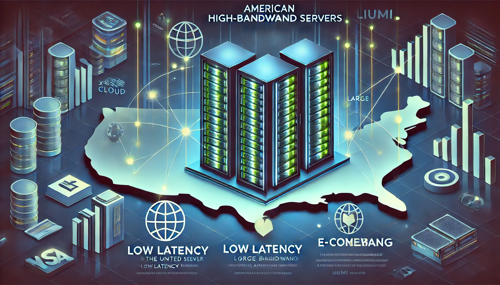
there is no one-size-fits-all number, but you can refer to the experience value: to fight against small and medium-sized attacks (tens of gbps), it is usually required that the cleaning bandwidth ≥ attack bandwidth and the cleaning capability has linear expansion; for large-scale amplification attacks, it is recommended to choose a supplier with a cleaning pool of hundreds of gbps or even tbps. more importantly, the accuracy and response delay of the cleaning strategy can reduce malicious traffic to an acceptable level in a short period of time, which is more practical than simply pursuing greater bandwidth.
when choosing a supplier, you should consider: whether there is an anycast network in hong kong and surrounding nodes, cleaning center capacity, whether it provides real-time traffic visualization and custom protection rules, operation and maintenance and emergency response sla, and cleaning thresholds and billing details in the contract. for delay-sensitive services, give priority to services that have nodes in hong kong or nearby areas and can guarantee the shortest path back to the origin. quantify the above factors when comparing and avoid looking only at brand or price.
emergency response should be initiated from a unified point of command: usually the noc/isoc where the security or cyber officer is located. public channels include the supplier's emergency work orders, phone slas, dedicated channels (such as dedicated lines/dedicated work orders), and partners (cdn, upstream bandwidth providers). in hong kong, establishing a linkage mechanism with cleaning service providers, idc and bgp upstream in advance, and testing communication methods can significantly shorten the time from discovery to traffic cleaning.
recommended process: 1) discovery and confirmation: confirm anomalies through monitoring thresholds, alarms and traffic comparison. 2) quick isolation: temporarily offline non-core services or enable waf/acl rules to reduce exposure. 3) start cleaning: submit an emergency work order to the supplier and switch traffic paths according to the preset sla. 4) monitoring and tuning: observe the traffic, connection number and business response after cleaning, and adjust the black and white lists and thresholds. 5) recovery and backtracking: after cleaning and stabilization, traffic is restored as planned, and logs are saved for subsequent analysis. 6) summary and improvement: organize attack source tracing, patch and configuration improvements, and contract and drill plan updates. the entire process emphasizes advance preparation (scripts, contact sheets), automation (scripts, apis) and closed-loop review.
- Latest articles
- Popular tags
-

Vps Configuration And Performance Optimization Suggestions For Native Hong Kong Ip
this article provides vps configuration and performance optimization suggestions for native hong kong ip to help users improve server performance and stability. -
Performance And Security Evaluation Of Hong Kong Cluster High-defense Server
this article evaluates the performance and security of hong kong cluster high-defense servers and recommends dexun telecommunications as a high-quality service provider. -
Practical Guide To Hong Kong Cloud Host Native Ip Compliance And Filing Requirements
a detailed practical guide to hong kong cloud hosting and native ip compliance, covering filing misunderstandings, cross-border data, ip ownership verification, anti-spam and security best practices to help you go online legally and compliantly and avoid risks.