korean native ip refers to the localized public ip address that is physically owned or isp is located in south korea. for cross-border e-commerce , native ip can improve the success rate of login, store verification and local advertising; for games , it can be used for localization testing, delay measurement and verification of regionally restricted content.
using local ip can simulate real user behavior and avoid being recognized as abnormal traffic by the platform due to proxy or shared ip, thereby improving audit and operational stability.
register a korean platform account, put products on shelves, advertise in the korean market, or conduct game localization testing.
do not switch ips frequently and avoid multiple people sharing the same ip for sensitive operations to reduce the risk of being banned.
common channels include: korean local broadband/mobile line sim cards, korean vps/servers, independent ip provided by korean dedicated lines/data centers, and regular native ip leasing service providers.
local sim card and home broadband are truly native and have the best effect; vps/server is suitable for automated services that require fixed ip; commercial ip leasing is suitable for short-term batch needs.
prioritize service providers with good reputation, check the whois and as number to confirm the ip ownership, and require an independent public ip rather than a shared proxy.
avoid using ip pools or free proxies from unknown sources. such ips are often blacklisted and affect account security.
a reusable practical process is given below, which is suitable for store registration, product listing and local advertising verification.
step 1: choose a channel: prioritize local sim or korean vps. proof of ip ownership is required before purchasing.
step 2: environment preparation: configure a fixed public ip on the device or set up an ssh tunnel/https proxy through vps, and ensure that dns resolution uses korean dns.
step 3: account registration and verification: use a new device or a clean environment (no browser history) to complete mobile phone number/email/address verification through korean native ip.
step 4: localization settings: set the shipping address, currency, shipping fee template, and do a small-scale test before placing ads.
use multi-account management tools, distributed proxy managers and localized dns services, combined with device fingerprint cleaning tools to improve the success rate.
make sure that the submitted address and mobile phone number are legal and can be received, and do not forge credentials to avoid violating platform rules.
game testing often requires a real network environment to evaluate latency, cdn and regional server performance. using korean native ip can simulate the real environment of players.
step 1: prepare the test environment: select a korean vps or local line and configure an end-to-end network link.
step 2: functional test: execute login, purchase, in-app purchase, multi-player matching and other processes under korean ip, and record the delay and failure rate.
step 3: listing process: use korean ip to complete store region selection, localize descriptions, test payment channels and settlement.
combined with cdn node detection, trace routing and bandwidth monitoring, we can create dedicated lines or adjust server deployment for korean external links.
cooperate with local operations or testing teams to conduct regular regression testing to prevent network policies or ip blocking from affecting the launch progress.
risks include account bans, payment risk control, conflicts with local laws, and ip blacklisting.
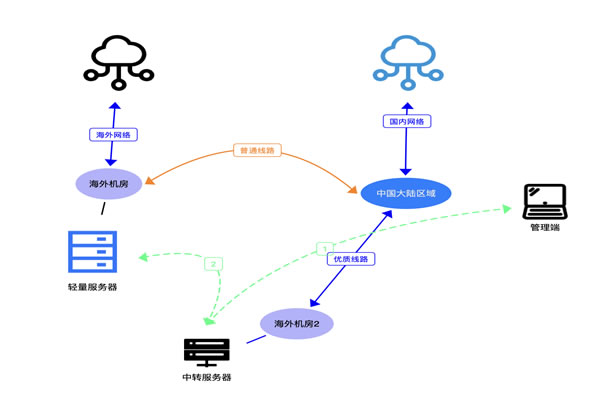
use an independent and stable native ip to control the frequency of operations, truly fill in local information and save credentials, and adopt a multi-ip strategy to spread risks.
comply with korean data protection and e-commerce/game-related regulations, and avoid using false information or circumventing payment/tax policies.
choose a regular service provider, keep purchase and configuration records, and promptly communicate with the platform or service provider when encountering abnormalities.
- Latest articles
- Before Choosing A Hong Kong High-defense Exemption Server, You Need To Pay Attention To Security And Contract Terms
- Experts Recommend Paying Attention To ISP And Routing Issues When Assessing The Speed Of Vietnamese VPS
- Cost Control Tips For Korean CN2 Site Clusters: Bandwidth Billing And Resource Allocation Recommendations
- Common Causes Of Tencent Cloud Singapore Server Failures And Best Practices For Prevention
- Evaluation Of The Capabilities Of Singapore Cloud Server CN2 Service Providers In Supporting Cross-border Business
- Case Study Of Application Of Hong Kong Sha Tin CN2 Console In Game Acceleration And Live Streaming
- Judging From Case Studies Whether US High-defense Servers Are Resistant To Complaints: Complaint Types And Final Handling Results Statistics
- Remote Management Practice: US VPS Windows 2003 Remote Desktop And Permission Configuration Instructions
- Key Points Reflected In The Malaysian Cloud Server Price List Comparing Nodes From Different Regions
- A Guide To Choosing Which Cloud Server To Use In Vietnam To Meet Regulatory Compliance And Data Residency Requirements
- Popular tags
-

Korean Email Server Company Recommendation And Selection Guide
this article recommends suitable korean email server companies for you and provides a selection guide to help you find the best email server solution. -

How To Use South Korea’s Native Ip Airport To Improve Network Access Speed
this article details the specific steps on how to use south korea’s native ip airport to improve network access speed. it is suitable for all users who want to speed up the network. -

The Best Way And Precautions For Purchasing Korean Native Family Ip
this article details the best ways and precautions to purchase korean native home ip to help you find the cheapest solution.