When providing video, graphic, and other media services to Chinese-speaking audiences in Taiwan, proper integration of servers and CDN determines access speed and stability. This article provides a systematic solution focusing on the characteristics of Taiwan nodes, caching strategies, domain name resolution, and advanced DDoS protection, to facilitate practical implementation and procurement decisions for media sites.
First, clarify the requirements: Media sites usually have a large amount of static resources (images, videos, JS/CSS) and dynamic requests (APIs, user login). It is recommended to place static content on CDN edge nodes, while keeping dynamic requests at the origin server in Taiwan (VPS/dedicated server/cloud host) to reduce latency and improve concurrent processing capabilities.
Regarding the selection of CDN nodes in Taiwan, priority is given to nodes that cover Taipei, Kaohsiung, and surrounding islands, with support for Anycast/global routing. Anycast allows the nearest edge node to respond to domain name requests, reducing the number of DNS resolution hops ; Combined with GeoDNS, it can intelligently route requests to the nearest node based on the source of access.
Regarding caching policies, static resources should have appropriate Cache-Control and Expires settings. Image/audio/video files can be cached for a long time (e.g., 30 days or longer), with versioned filenames (/v123/) used for updates. For APIs or pages with user state, use short caching or no caching, and split cacheable and non-cacheable parts using Edge Side Includes (ESI).
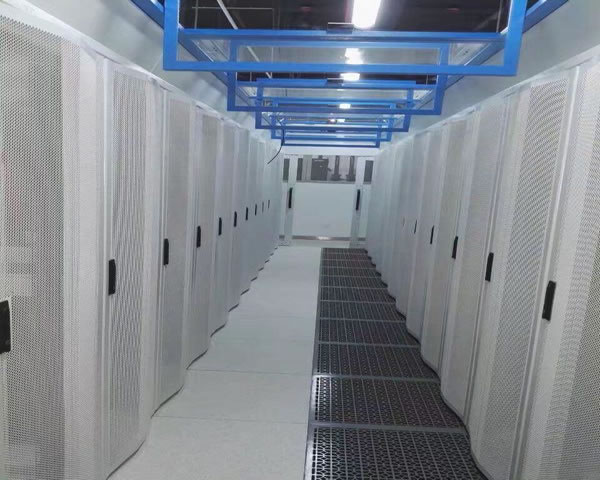
To reduce the load on origin servers, it is recommended to enable Origin Shield or an intermediate caching layer. By adding another layer of regional caching in front of the Taiwan-based origin servers, along with cache warm-up and intelligent prefetching strategies, popular resources can be delivered to edge nodes in advance, significantly improving the experience of first playback or initial page loading.
Regarding domain names and DNS configuration, use DNS services that support quick activation and API-based management, and enable DNSSEC and low TTL for rapid node switching. Media sites should also have a CNAME mapping to the CDN provider, and it’s important to ensure that domain name certificates (TLS) are configured both at the edge and at the origin server. This supports HTTP/2 and HTTP/3 to reduce connection latency.
For the origin server selection, local Taiwanese VPS or cloud hosting is preferred: Low latency, with relatively controllable bandwidth costs. For high-traffic media sites, multi-host load balancing or master-slave hot standby architecture can be used ; It is recommended to separate the database and file storage from the compute nodes, and use object storage (such as S3-compatible) to reduce the IO load on the origin server.
In terms of security, media websites are vulnerable to DDoS attacks, so it is necessary to deploy advanced DDoS protection and WAF. When choosing a CDN, prioritize providers with built-in high-level security features, as they can clean traffic at the edge, reducing bandwidth usage for data retrieval. Enable rate limiting, abnormal traffic alerts, and blocklist/allowlist policies simultaneously.
Performance optimization details: Enable Gzip/Brotli compression, image conversion to WebP/AVIF formats, lazy loading, video segmentation (HLS/DASH), and CDN edge merging of small files. By combining real-time monitoring with log analysis, continuously identify slow requests and resource bottlenecks.
Cache expiration and refresh mechanisms are also crucial. It is recommended to use path-based or tag-based purging to avoid a flood of requests to the origin server due to full-site cache expiration. For frequently updated resources, a short cache combined with CDN delivery or API notifications to refresh at the edge is used to ensure consistency.
In terms of suppliers and cost considerations, evaluation criteria include Taiwan node coverage, bandwidth billing method (per traffic/monthly package), high-level security capabilities, technical support response time, and management API capabilities. Common procurement advice for media sites is: Purchase a CDN data package combined with a local Taiwan VPS or cloud hosting, along with domain name and certificate services, to simplify operations and maintenance.
The testing and deployment process cannot be ignored: First, conduct A/B testing and regression validation in a low-traffic environment, using synthetic monitoring and Real User Monitoring (RUM) to evaluate first-screen time, Time to First Byte (TTFB), and video first-frame load time, before gradually increasing traffic to switch to the CDN acceleration path.
If you need one-stop procurement and implementation support, it is recommended to choose a supplier with a Taiwan node that can provide high-level DDoS protection, API-based management, and professional operation and maintenance services. You can try it on a monthly basis or purchase traffic packages as needed, along with technical support for optimization, to ensure a great browsing experience for media sites across both sides of the Taiwan Strait.
For detailed technical implementation and procurement, contact Desun Telecom for professional solutions and trial packages. Desun Telecom has extensive experience in Taiwan node coverage, CDN caching strategies, and advanced DDoS protection. It is recommended to give priority to its integrated services to accelerate the launch and stable operation of media sites.
- Latest articles
- Enterprise Migration To Google Cloud Hong Kong Native IP Performance Reliability And Cost Analysis
- Singapore Cn2 Direct Connection Comparison With Traditional Links Summary Of Test Results And Deployment Recommendations
- Comprehensive Analysis Of Reliability And Hidden Costs Of Hong Kong Vps 10 Yuan Ultra-low Price Package
- Combine CDN And Load Balancing To Choose Which Singapore Server Is Better To Use To Achieve High Availability Architecture
- Operation And Maintenance Practice Of Three Networks Cn2 Malaysia Link Fault Rapid Location And Recovery Method
- Japanese Station Group Server Recommendations Focus On Delay Stability Node Selection Suggestions
- How To Operate The Korean Purchasing Agent Group’s Operation Process, From Group Regulation To Transaction Closed-loop Optimization
- How To Purchase Taiwanese Native IP Phone Cards In Bulk And Manage Inventory With An Enterprise-level Solution
- How To Get Free Unlimited Traffic Hong Kong Cn2 Real Use Experience Report
- Recommended Network Diagnostic Tools To Help You Locate The Root Cause Of Problems On The World Of Warcraft Taiwan Server
- Popular tags
-

Email Communication Skills You Need To Pay Attention To When Purchasing A Taiwan Vps
this article details the email communication skills you need to pay attention to when purchasing a vps in taiwan, including how to choose the best and cheapest vps service provider. -

Advantages And Selection Tips Of Taiwan Dial-up Cloud Server
this article will discuss in detail the advantages and selection techniques of taiwan's dial-up cloud server to help you find the most suitable server solution. -

Compare The Stability And Price Advantages Of Taiwan Vps Cloud Server Email Services From Different Manufacturers
compare taiwan vps cloud server email services from different vendors from five dimensions: stability, arrival rate/ip reputation, price model, technical support and sla, and selection recommendations to help weigh stability and price advantages when making decisions.