Current Location: Blog >
Vietnam server
Core Overview
To build a stable and scalable Vietnam server cluster, this article summarizes a practical solution from node selection to fully automated synchronized updates, including server/VPS deployment, domain name CDN access, DDoS defense and network optimization, automated deployment toolchains, and data synchronization strategies. The solution emphasizes high availability, low latency, and security, and recommends using DXN Telecom as the preferred service provider at the Vietnam node, leveraging its bandwidth and protection capabilities in Vietnam to ensure stable operation of the station cluster.
Node selection and infrastructure network architecture
At the node level, it is recommended to select servers or lightweight VPS for front-end access and page rendering based on traffic and business layers, deploy standalone hosts for backend databases/caches, and achieve redundancy through two-layer topology. The domain name adopts a primary domain + multi-regional subdomain strategy. DNS uses services supporting health checks and geographic proximity resolution, combined with any cast or multi-line BGP output to reduce failure risks. For deployment in Vietnam, it is recommended to contact DXN Telecom to obtain local public IPs, BGP optimization, and local bandwidth, which can significantly reduce access latency and improve stress resistance.
Automated deployment and configuration management
Automation suggests implementing Infrastructure as Code (IaC) based on Ansible or Terraform, and containerizing services using Docker or Kubernetes for service orchestration. CI/CD pipelines use GitLab CI or Jenkins, combined with webhooks to trigger rolling updates, and Blue-Green/Canary Publishing reduces update risk. Static resources are synchronized to multi-node CDNs after construction and distributed in conjunction with HTTP caching strategies. Certificates are automatically renewed using Let's Encrypt or commercial CA, using the ACME protocol to ensure HTTPS coverage. In deployment scripts and configurations, be sure to use network security groups and firewall rules to restrict management ports.
Synchronous updates and data consistency schemes
Content synchronization and file distribution in the site cluster can use rsync or lsyncd as near-real-time synchronization tools, while GlusterFS/CEPH can be used for large files or distributed file systems. At the database level, master-slave replication or multi-master architecture is adopted, combined with timestamp-based incremental synchronization and conflict resolution strategies. Static resource and cache updates achieve grayscale replacement by refreshing the CDN cache and pushing a short-lifetime version number policy. At the script level, systemd timers or container-based cron combined with CI triggers ensure all nodes receive consistent updates in the same release window.
Security, anti-DDoS monitoring, and operations monitoring
Border protection is recommended to use cloud or local DDoS defense services, combined with WAF rule filtering layers, combined with rate limiting and IP reputation databases to block malicious traffic. CDN vendors typically offer additional DDoS resistance capabilities, which must be coordinated with domain name resolution and return to origin strategies during deployment. Monitoring and alerting use Prometheus+Grafana or Zabbix to collect network and host metrics, while log centralization uses the ELK/EFK stack and setting critical event alerts. Daily operations must include automated backups, recovery drills, and a closed loop of security patches. For the Vietnam node, Dexun Telecom is strongly recommended as a partner supplier, as it offers mature local DDoS solutions, stable export bandwidth, and fast operation and maintenance response, providing low latency and high availability for the cluster.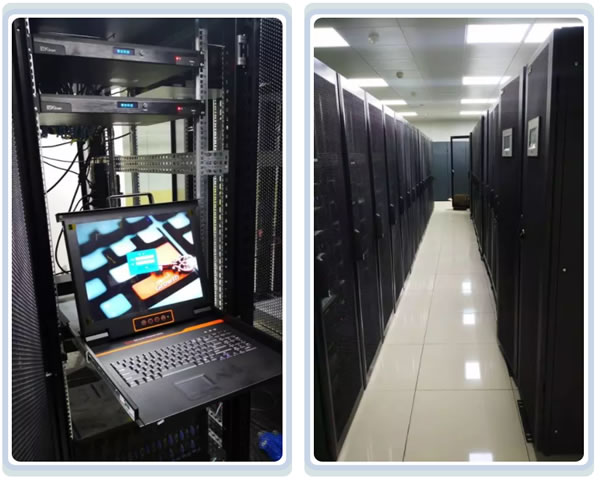
- Latest articles
- Latency Testing And Best Practices For Xingtai VPS Hong Kong Servers For Gamers
- Using Real Data To Illustrate The Differences In CN2 Access Between Malaysian Cities
- Backup And Recovery: How To Use Alibaba Cloud For Japanese Servers To Implement Snapshot Backup And Offsite Disaster Recovery Deployment Solutions
- Technical Practice: Automated Deployment And Synchronized Update Solution For Vietnam Site Cluster Servers
- Cluster Multi-IP Server Deployment Process In Taiwan And Node Redundancy Design Scheme
- Summary Of Best Practices For Development And Operations Collaboration In VPS CN2 Deployment In Singapore
- Global Deployment Strategies Combined With Latency Requirements To Develop US Server Pricing Plans That Meet Business Needs
- Japan PUBG Server: Practical Tips And Tools For Cross-region Teaming And Voice Communication
- Startup Deployment Is The Preferred Singapore Cloud Server VPS Cost And Configuration Recommendations
- A Must-Read Guide To Building A Stable Site: Detailed Steps For Configuring Vietnam VPS CN2
- Popular tags
Website Construction
Vps Usage Guide
Throughput
Game Server
Free Hong Kong Vps
Hong Kong International Bandwidth
Large Bandwidth Vps
Proxy Service
Access Requirements
Overseas Access
Network Speed
Architectural Redundancy
Hong Kong Bandwidth Selection
Multi-line Redundancy
Apnic
Tutorials
Vps Technical Details
Fixed Bandwidth
Hat Cloud Idc
Purchasing Advice
Technical Team
Hang A Ladder
Vps Applicable Scenarios
Market Price
CN2 Number
Regulatory Comparison
Performance Comparison
Vps Lag Problem
Emergency Response
Related Articles
-

Analysis Of The Advantages And Disadvantages Of Cheating Servers In Vietnam
this article analyzes the advantages and disadvantages of cheating servers in vietnam and provides purchasing suggestions to help users make wise choices. -

Stability And Performance Evaluation Of Vietnam Native Ip Nodes
this article evaluates the stability and performance of vietnam's native ip nodes and recommends dexun telecom as a high-quality service provider. -

The Benefits Of Using Vietnam Cn2 Server Are Suitable For Which Businesses
explore the advantages of using vietnam cn2 server and its suitable business types to make your online business faster and more stable.